in industrial production and daily applications, resin is a common polymer material, among which silicone resin and ordinary resin belong to the same resin category, but there are obvious differences in performance and application. Understanding these differences can help you choose the right resin material based on your actual needs.
silicone resins have outstanding performance in terms of temperature resistance and can maintain stable performance at higher temperatures. Whether it is in a high temperature state for a long time or experiencing drastic changes in temperature, its structure is not easy to decompose or deform, and its original mechanical strength and insulation properties can be maintained. However, ordinary resins have a relatively narrow temperature resistance range and are prone to softening, discoloration, or even decomposition in high-temperature environments, leading to reduced performance. For example, in some surface coatings of equipment components that need to withstand high temperatures, silicone resins can work stably for a long time, while ordinary resins are difficult to adapt to such environments.
in terms of weather resistance, silicone resins show greater adaptability. It can effectively resist ultraviolet rays in sunlight, rain and snow erosion, and various corrosive factors in the atmosphere, and is not prone to aging phenomena such as surface cracking, chalking or discoloration after long-term exposure to outdoor environments. When used outdoors, ordinary resins often lose their original properties and appearance due to aging after a period of natural environmental testing, such as the coating losing its luster and peeling. Therefore, silicone resin is a more suitable choice for outdoor billboards, building exterior wall decoration, and other scenarios that need to withstand the impact of the natural environment for a long time.
3. The insulation performance is different
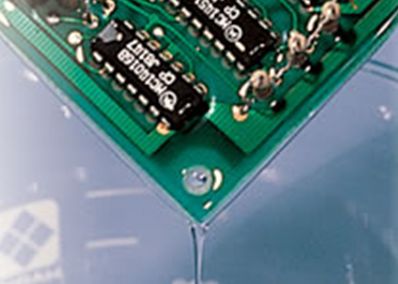
silicone resins have excellent insulating properties, and this performance remains stable even in high-temperature, humid and other environments. Its molecular structure does not contain polar groups and is not easily conductive, so it is often used as insulation materials in the field of electronics and electrical applications, such as insulation coatings for motors and transformers. Although the insulation performance of ordinary resin can also meet general needs, its insulation may be significantly reduced under high temperature or humid conditions, making it difficult to adapt to some scenarios with high insulation requirements. For example, in the packaging of electronic components operating at high temperatures, the insulation stability of silicone resins is incomparable to ordinary resins.

due to the different properties, silicone resins and ordinary resins have their own areas of application. Silicone resins are mostly used in fields with strict requirements for material properties due to their high and low temperature resistance, weather resistance, and insulation stability. Ordinary resin is more used in daily scenarios with low performance requirements due to its lower cost and relatively simple processing technology, such as the surface decoration of ordinary furniture, the production of common plastic products, and the bonding of general packaging materials.

东莞市艾澜德新材料有限公司
Dongguan Ailand New Material Co., Ltd.